
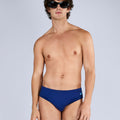


Tucked up a narrow staircase in The Castro, a sexy lifeguard beckons from the edges of a poster for the long-gone SF gay bar Plunge. Follow his gaze and you’ll find a flyer for a male burlesque troupe called “Baloney,” a nail file promoting a local fisting party, and a silver penis charm—it pops a boner when you tug its balls.
This is AutoErotica, perhaps the only storefront in the country dedicated to selling the kind of gay ephemera usually destined for the trash bin. Packed into a space the size of a doctor’s waiting room are tables topped with safe sex ads, ACT UP protest banners, a “Broke Back Mountain” poster signed by the cast, and boxes upon boxes of vintage gay porn magazines—Playguy, Torso, Blueboy—publications that have been out of print for years.
“It's not gay glam,” says 80-year-old Patrick Batt, longtime owner of this queer treasure trove. “I tell people that right off.”

Since opening the store in 1996, Batt’s collection of queer cast-offs has become a sort of living history, he says. The objects in Batt’s collection are all too often lost to the dumpster, stuck behind the walls of an archive, or censored into obscurity. At AutoErotica, you can take a piece of this queer legacy home.
“I've become this purveyor of history that now people are very hungry for, especially younger people who only know about these things in the abstract,” says Batt.
After decades of living it, it’s a gay history Batt is intimately familiar with. He grew up in Alaska, bouncing to San Francisco in 1963, then Chicago where he managed the famed leather bar Gold Coast. In 1980 Batt returned to the bay and became the general manager of leather-magazine Drummer. There he started Mercury Mail Order out of a small storefront in the Castro. It was a Drummer mail order company for condoms, lube, sex toys, the works.
The business quickly took off and in 1996 he opened AutoErotica across the street. When the dot-com boom arrived, and the mail order industry went belly up, Batt noticed that customers spent more time perusing the shop’s magazine rack than they did the dildos. He pivoted to selling the collection of gay magazines and ephemera that had been piling up in his apartment and in corners of the store, acquired over years during his time in the leather scene and from other Castro longhaulers.

The ephemera calls back to the old San Francisco, a city, Batt says, that couldn't be more different from the SF of today. Back then, the city was still teeming with the countercultural energy that made it a gay destination. “It was just totally crazy,” says Batt. “You couldn't get down the street without getting laid.”
“I'm an actual cruising kind of guy,” says Batt. “I want the interaction with people.” Though the store itself is a cruise-free zone, he says.
Many come to AutoErotica feeling nostalgic for this era, says Batt, when porn and sex itself weren’t just a few finger taps away.
For Bradley Roberge, who curates AutoErotica’s Instagram, the store is a “sacred space,” an altar to a gay porn history that he says is being forgotten in our age of OnlyFans and DIY pornography. Part of this history is the store’s vintage gay magazines, many of which are filled with personal ads, analog precursors to cruising sites like Sniffies. “These were ways for people to find each other. Whether it was a long distance romance or to find their community where they lived,” says Roberge.
Sometimes the models in these magazines will come in looking for copies of their old work, says Roberge. More often, though, it’s people looking for the 90s porn magazine they saved from the trash, stole from a newsstand, or hid under their mattress for years.

Last June the mini doc “AutoErotica: We Buy Gay Stuff” debuted at SF’s Frameline Film Festival. Director Jeremy Von Stilb is raising funds to develop it into a full-length film.
For most of its life, AutoErotica was the kind of hole-in-the-wall known only to dedicated collectors and SF locals. In the last five years, the store has found a new audience through the documentary, which covers AutoErotica’s history and Batt’s life in SF, and on Instagram where the store has a following of over 83K.
“I'm beginning to wrap my head around the fact that, again, this place is bigger than me, and people find it really important,” says Batt. Still, folks wander into the store all the time he says who are unaware of the gay history that’s unfolded around them for years. “But I wonder,” says Batt, “maybe them coming in here will [help them] become collectors or become interested in saving our history too.”
Photos by Bradley Roberge